

New Zealand University develops kiwi fruit automatic harvesting robot新西兰大学研发猕猴桃自动采摘机器人
University of Waikato team developing a tool that will be as gentle as human hands at harvest time.
怀卡托大学团队开发了一种工具,在收获时将像人手一样温柔。
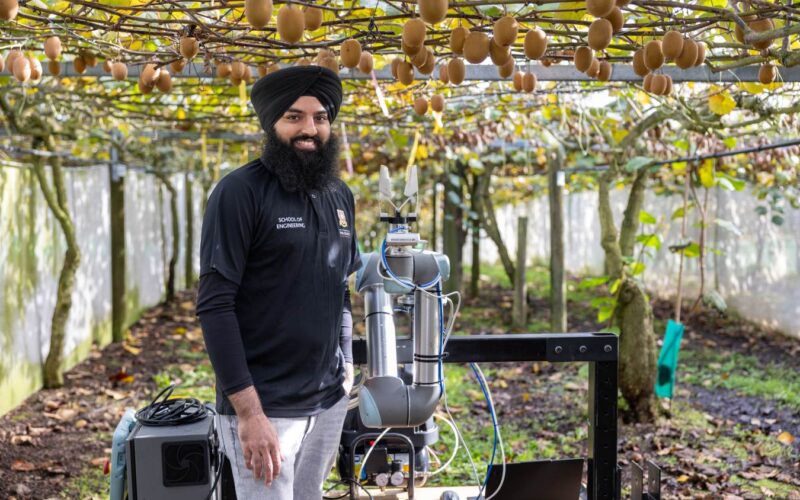
▲Kiwi automatic harvesting robot
A team from the University of Waikato is developing cost-effective technology to help ease labour shortages in the horticulture sector and reduce fruit wastage.
Te Kura Mata-Ao School of Engineering senior lecturer Dr Ajit Pal Singh and his team of seven have been working on a new gripper, the component at the end of a robotic system that physically picks kiwifruit, much like a human hand does.
“One of the innovations is the actual gripper structure. The other is a soft ‘finger’ that attaches to the structure and gently interacts with the fruit so it doesn’t get damaged,” said Singh.
The team has received funding for the project from the MBIE Endeavour Fund through a Smart Ideas project.
怀卡托大学的一个团队正在开发具有成本效益的技术,以帮助缓解园艺行业的劳动力短缺,减少水果浪费。
Te Kura Mata Ao工程学院高级讲师Ajit Pal Singh博士和他的七人团队一直在研究一种新的抓取器,这是一种机器人系统末端的组件,可以像人手一样实际采摘猕猴桃。
辛格说:“其中一项创新是实际的抓取器结构。另一项是柔软的‘手指’,它附着在结构上,与水果轻轻互动,这样水果就不会受损。”。
该团队通过Smart Ideas项目获得了MBIE Endeavor基金对该项目的资助。

▲Kiwi automatic harvesting robot
Singh said there’s no point introducing robotics to an orchard if it’s going to damage the fruit.
“If the fruit is bruised or dropped, the benefit of robotic automation is lost. Our designs aim to reduce damage through their soft, flexible contact surfaces.”
Singh said the key challenge facing growers and industry is the labour shortage that’s amplified since covid-19.
“The labour shortages are putting pressure on the growers to recruit skilled workers to help them harvest the fruit, and if there’s not enough skilled workers on the ground, then there’s a lot of fruit that goes into the waste because it’s unpicked – so they’re losing money.”
辛格说,如果将机器人引入果园会损害水果,那就没有意义了。
“如果水果碰伤或掉落,机器人自动化的好处就会丧失。我们的设计旨在通过其柔软、灵活的接触面减少损坏。”
辛格表示,种植者和工业面临的关键挑战是自新冠肺炎以来劳动力短缺加剧。
“劳动力短缺给种植者带来了压力,要求他们招募技术工人来帮助他们收割水果,如果地面上没有足够的技术工人,那么就会有很多水果被浪费,因为它们没有被采摘——所以他们在赔钱。”
The team’s long-term goal is to support growers with reliable robotic tools that reduce dependence on seasonal labour and help ensure more consistent harvesting outcomes.
Having tested the prototypes in the lab, they have recently begun preliminary field trials in an orchard with “quite promising” results showing effective fruit handling and minimal visible damage.
Unlike traditional designs with multiple joints or sensors, the grippers use flexible, single-piece structures that conform gently around the fruit, reducing mechanical complexity.
“These grippers are 3D-printed prototypes – single, jointless structures designed specifically for orchard use, not just lab testing.
该团队的长期目标是为种植者提供可靠的机器人工具,以减少对季节性劳动力的依赖,并帮助确保更一致的收获结果。
在实验室测试了原型后,他们最近开始在果园进行初步田间试验,结果“非常有希望”,显示出有效的水果处理和最小的可见损伤。
与具有多个关节或传感器的传统设计不同,夹持器使用灵活的单件结构,在水果周围轻轻贴合,降低了机械复杂性。
“这些夹具是3D打印的原型——专为果园使用而设计的单一、无缝结构,而不仅仅是实验室测试。
“We wanted something that performs in real conditions: easy to maintain, robust and ready for the demands of the field.”
He also pointed out that because the grippers’ structures are single-piece designs, they could eventually be manufactured at scale using plastic injection moulding, making them even more cost-effective, durable and easy to produce in large quantities.
The plan is to test them thoroughly in the orchard this season, and Singh said the team will take them back to the lab to make any improvements.
“From an engineering point of view, our focus is on solving practical, real-world challenges. This project is a strong example of how innovative design can potentially deliver high-impact solutions tailored to industry needs.”
“我们想要在真实条件下运行的东西:易于维护、坚固耐用,能够满足现场的需求。”
他还指出,由于夹具的结构是单件设计,因此最终可以使用塑料注塑成型大规模制造,使其更具成本效益、耐用性和易于大量生产。
该计划是在本季在果园中对它们进行彻底测试,辛格说,该团队将把它们带回实验室进行任何改进。
“从工程的角度来看,我们的重点是解决实际的、现实世界的挑战。这个项目是一个很好的例子,说明创新设计如何能够提供针对行业需求量身定制的高影响力解决方案。”


评论