

Kiwi Pollination - How to Promote It? 这是一家法国猕猴桃公司撰写的猕猴桃授粉方面的知识,原文如下,我在这里翻译一下,原文没有配图,我们给文章配上相关图片,更容易理解了。
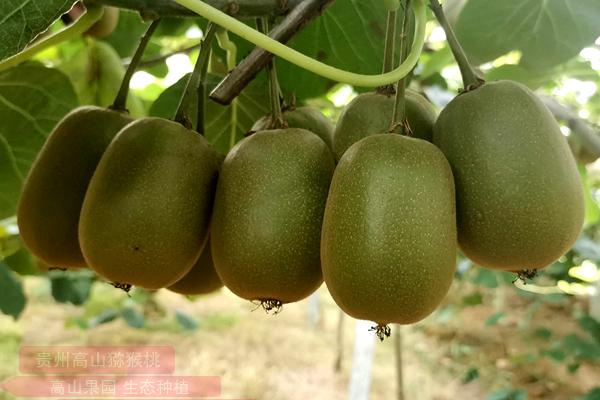
▲Chinese Red Heart Kiwi Orchard中国的红心猕猴桃果园
Growing quality kiwifruit in quantity relies on several essential elements, including successful pollination. As a kiwifruit grower in France, it's crucial to apply optimal techniques while benefiting from the advice of kiwi growing experts to achieve satisfactory results. In this article, we explore in detail the technical strategies and practical tools to improve kiwifruit pollination, as well as the solutions offered by Kiwiverse to support you.
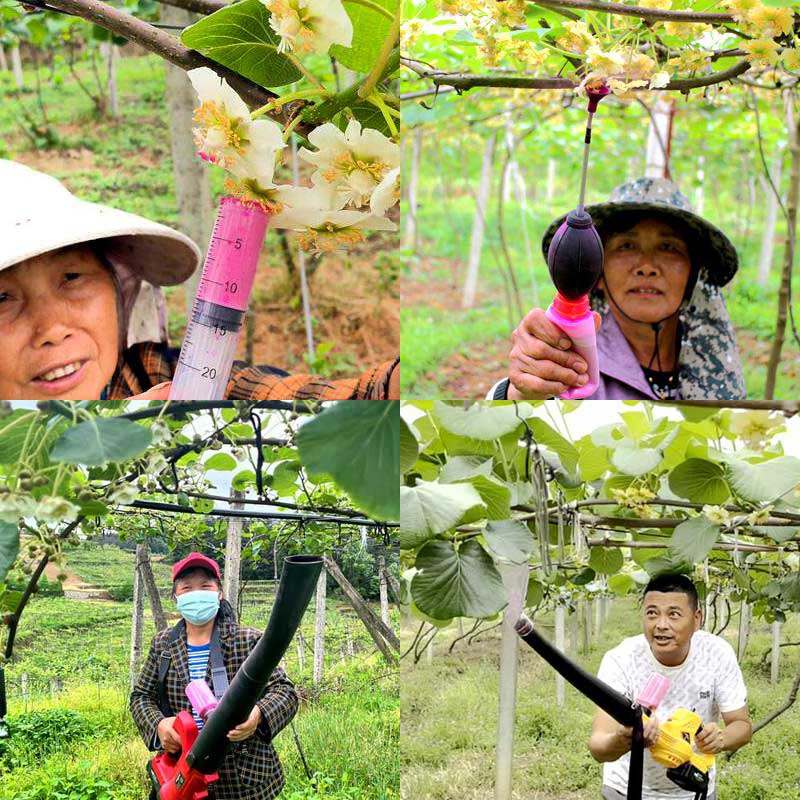
▲中国猕猴桃果园常见的授粉方式 Common pollination methods in Chinese kiwifruit orchards
The Basics of Kiwi Pollination
Pollination is a key step in kiwifruit cultivation. Unlike other crops, kiwi flowers are generally dioecious, meaning there are separate male and female plants. For successful fruiting, it is necessary to transfer pollen from male flowers to female flowers.

▲Comparison of male and female flowers in kiwifruit
Why is pollination essential?
Successful pollination ensures uniform and good quality fruit formation.
Without proper intervention, the harvest may be compromised by incomplete fruiting or small fruit.
The synchronization between the flowering of male and female plants is crucial.
The ideal ratio for arranging male and female plants
Plant 1 male plant for every 5 to 7 female plants to ensure optimal pollination.
Male plants should be placed in the center or in close proximity to the female plants, approximately 2 meters apart.
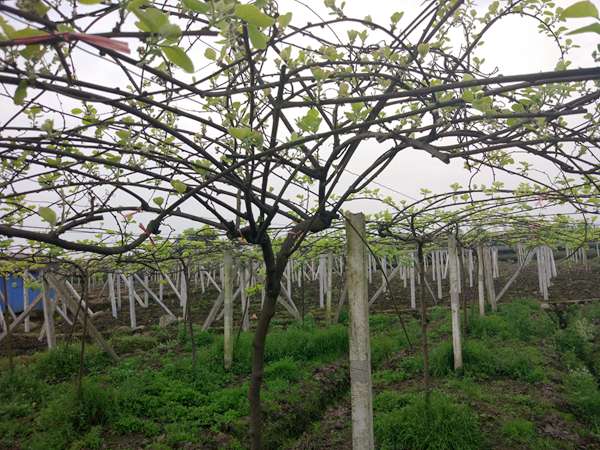
(前面一株是公树,修剪方式和后面的雌株完全不同)
Strategies to promote kiwi pollination
1. Introduction of effective pollinators
Pollinators play a vital role in pollen transfer. The goal is to maximize their presence in your orchards.
Honeybees: Install between 3 and 4 hives per acre or 7 to 8 hives per hectare. Although they are less attracted to kiwi flowers (lack of nectar), they remain the main pollinators.
Bumblebees: Active even in cool weather, they complement the work of domestic bees.

▲Bees pollinate kiwifruit
Wild Insects: Wild bees, butterflies and other local insects can also contribute significantly.
How to attract more pollinators?
Plant honey-producing crops around your plots: lavender, phacelia, clover or buckwheat.
Create flowering hedges with attractive plants such as willow, hawthorn or hazel.
Preserve wild flora and let the natural edges of plots bloom.

▲新西兰猕猴桃果园放蜜蜂
2. Artificialization techniques
Some modern techniques can enhance natural pollination:
Hand pollination: Ideal for small farms. Harvest the male flowers and rub them over the female flowers. Make two passes at different times to cover the entire flowering period.
Spraying robots: Using an air-liquid system, they disperse pollen with impressive efficiency.
The advantage of advanced technologies
These techniques make it possible to compensate for climatic variations or the decline in the population of natural pollinators.
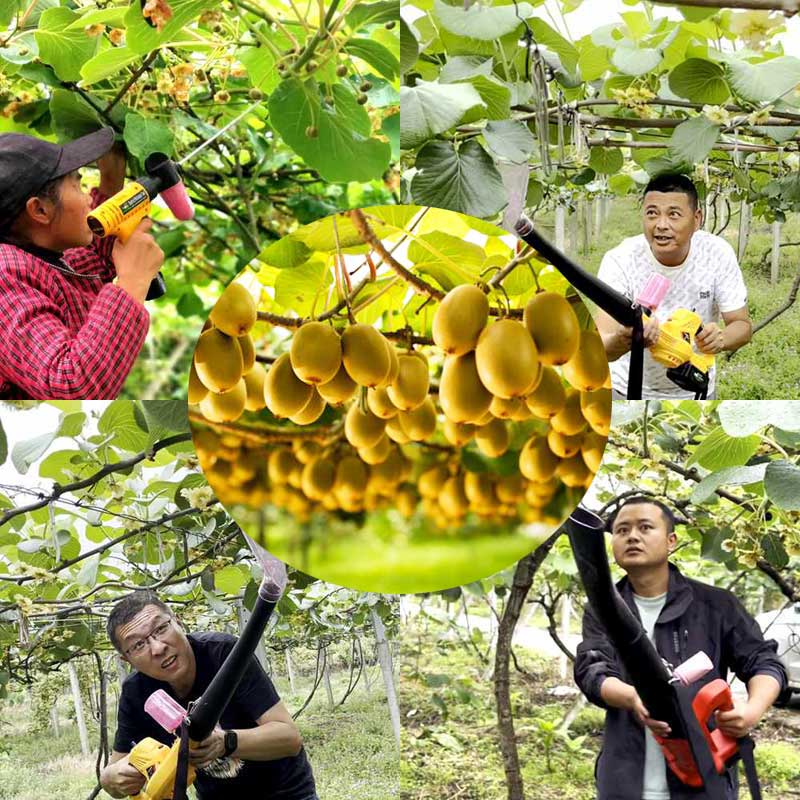
▲Common pollination methods in red heart kiwifruit orchards in Sichuan Province 四川猕猴桃果园常用的授粉方法
Optimizing the environment of kiwifruit orchards
Landscaping to promote biodiversity
A rich and diverse environment encourages the arrival of pollinators while increasing their activity in the orchard.
Honey-producing cover crops: Phacelia, clover or alfalfa can be grown between rows of kiwi.
Flower strips: Install flower strips along plots to attract more insects.
Pollinator Habitat: Create nesting areas with woodpiles, rocks, or sand.
Synchronization of flowering of male and female plants
Use male and female varieties that flower simultaneously.
Plan specific interventions to maximize pollination during the days when male pollen is most viable (2 to 3 days after opening).

▲Bees pollinate kiwifruit
Technical support from Kiwiverse
1. Supply of professional quality plants and rootstocks
Wide range of grafted plants, in pots or cells, from specialist nurseries.
Kiwi rootstocks available at producer prices, with delivery throughout France.
2. Personalized advice to design or optimize your orchard
Technical studies on the optimal arrangement of plants.
Planning pollination for optimal production.
3. Responsive sales service
Quote within 48 hours with free advice.
Decreasing prices according to volume for large orders.
上面是这家法国公司的服务内容。
Kiwifruit Pollination FAQ
What are the best pollinators for kiwis?
Honeybees, bumblebees, and wild bees are the most effective. Bumblebees remain active even in adverse weather conditions.
How many male plants should I plant?
It is recommended to plant one male plant for every 5 to 7 female plants, with a spacing of 2 meters.
Should we favor natural or artificial pollination?
The two approaches are complementary. Efficient natural pollination is ideal, but artificialization techniques can compensate for natural deficiencies.
Can pollination be improved by using neighboring plants?
Yes, growing honey plants like clover or phacelia around the orchard attracts more pollinators.
How to synchronize the flowering of male and female plants?
Choose varieties that flower simultaneously and monitor the periods of female flower receptivity and male pollen viability.
Do you offer personalized advice?
Yes, Kiwiverse offers technical advice tailored to your orchard to ensure optimal pollination and high-quality production.
Conclusion
Kiwi pollination is a key factor in ensuring abundant, high-quality production. By combining proper plant placement, pollinator-attracting techniques, and modern artificialization tools, you can maximize your yields. Kiwiverse, the kiwi farming expert, will guide you every step of the way to ensure your project is a success, from choosing the right plants to managing your orchard.
Contact us now to benefit from our expert advice and order your grafted kiwi plants at producer prices, with careful delivery directly to your plot.
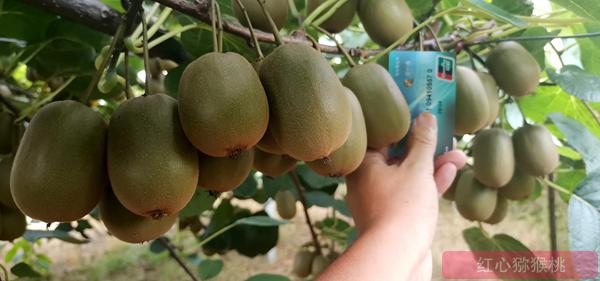
▲Chinese Red Heart Kiwi Orchard中国的红心猕猴桃果园
猕猴桃授粉-如何推广?
大量种植优质猕猴桃取决于几个基本要素,包括成功授粉。作为法国的猕猴桃种植者,在受益于猕猴桃种植专家的建议的同时应用最佳技术以获得满意的结果至关重要。在这篇文章中,我们详细探讨了改善猕猴桃授粉的技术策略和实用工具,以及Kiwiverse为您提供的支持解决方案。
猕猴桃授粉基础
授粉是猕猴桃栽培的关键步骤。与其他作物不同,猕猴桃花通常是雌雄异株的,这意味着有单独的雄性和雌性植物。为了成功结果,有必要将花粉从雄花转移到雌花。
为什么授粉很重要?
成功的授粉确保了均匀和优质的果实形成。
如果没有适当的干预,收获可能会因不完全结果或果实小而受到影响。
雄性和雌性植物开花的同步性至关重要。
雌雄植物排列的理想比例
每5至7株雌株种植1株雄株,以确保最佳授粉。
雄性植物应放置在中心或靠近雌性植物,相距约2米。

▲新西兰在果园引入蜜蜂的方法在国内实际无法实施
促进猕猴桃授粉的策略
1.有效传粉媒介的引进
传粉者在花粉转移中起着至关重要的作用。目标是最大限度地提高它们在果园中的存在。
蜜蜂:每英亩安装3到4个蜂箱,每公顷安装7到8个蜂箱。虽然它们对猕猴桃的吸引力较小(缺乏花蜜),但它们仍然是主要的传粉者。
大黄蜂:即使在凉爽的天气里也很活跃,它们补充了家养蜜蜂的工作。
野生昆虫:野生蜜蜂、蝴蝶和其他当地昆虫也可能做出重大贡献。
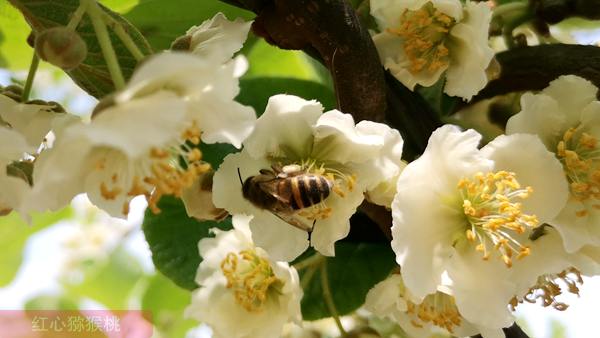
▲Bees pollinate kiwifruit
如何吸引更多的传粉者?
在你的地块周围种植产蜜作物:薰衣草、睡莲、苜蓿或荞麦。
用柳树、山楂或榛等有吸引力的植物建造开花树篱。
保护野生植物,让地块的自然边缘绽放。
2.人工技术
一些现代技术可以增强自然授粉:
手工授粉:小型农场的理想选择。摘下雄花,把它们擦在雌花上。在不同的时间进行两次通行,以覆盖整个花期。
喷洒机器人:使用气液系统,它们以令人印象深刻的效率分散花粉。
先进技术的优势
这些技术可以补偿气候变化或自然传粉昆虫种群的减少。
猕猴桃园环境优化
绿化以促进生物多样性
丰富多样的环境鼓励传粉昆虫的到来,同时增加它们在果园中的活动。
产蜜覆盖作物:番荔枝、三叶草或苜蓿可以种植在几行猕猴桃之间。
花条:沿着地块安装花条,以吸引更多的昆虫。
传粉者栖息地:用木桩、岩石或沙子创造筑巢区。
雌雄植物开花同步
使用同时开花的雄性和雌性品种。

▲猕猴桃蜜蜂授粉
计划具体的干预措施,在雄性花粉最具活力的日子里(开放后2至3天)最大限度地授粉。
Kiwiverse的技术支持
1.提供专业品质的植物和砧木
来自专业苗圃的盆栽或细胞中的各种嫁接植物。
猕猴桃砧木以生产者价格出售,并在法国各地交付。
2.设计或优化果园的个性化建议
关于植物最佳排列的技术研究。
规划授粉以实现最佳生产。
3.响应式销售服务
48小时内报价,免费咨询。
根据大订单的数量降低价格。
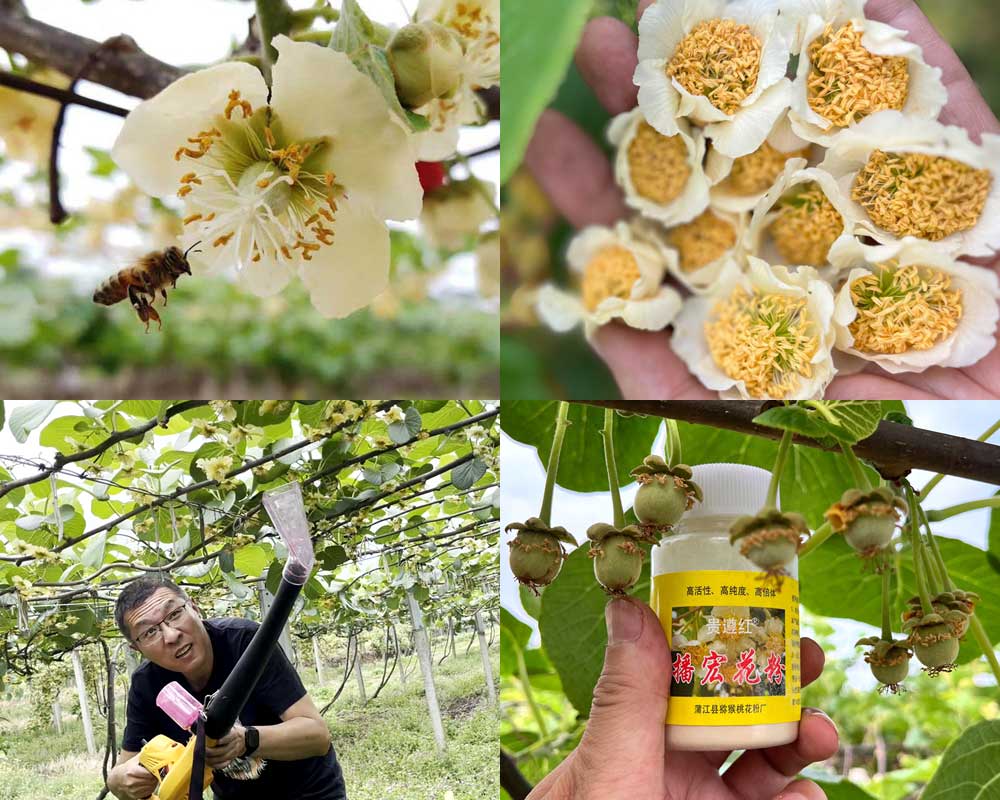
▲kiwi pollen
猕猴桃授粉常见问题
猕猴桃最好的传粉者是什么?
蜜蜂、大黄蜂和野蜂是最有效的。即使在恶劣的天气条件下,大黄蜂仍然很活跃。
我应该种多少株雄性植物?
建议每5至7株雌株种植一株雄株,间距为2米。
我们应该支持自然授粉还是人工授粉?
这两种方法是互补的。高效的自然授粉是理想的,但人工授粉技术可以弥补自然授粉的不足。
利用邻近植物可以改善授粉吗?
是的,在果园周围种植苜蓿或睡莲等蜜源植物会吸引更多的传粉者。
如何同步雄性和雌性植物的开花?
选择同时开花的品种,监测雌花接受期和雄花粉活力期。
你提供个性化建议吗?
是的,Kiwiverse为您的果园提供量身定制的技术建议,以确保最佳的授粉和高质量的生产。

▲遵义市播宏猕猴桃果园有限公司是西南地区最大的猕猴桃果业公司,种植1200亩高山猕猴桃,是遵义市农业龙头企业,市级先进扶贫企业。其中猕猴桃花粉项目是中国单体面积最大的猕猴桃花粉园,单体采粉园达到了400亩,丰产期产花粉400公斤,提供高品质、高倍体、高活性的猕猴桃花粉,可以满足30000亩果园的花粉需要。联系微信18030405084


评论