

Breeding the kiwifruit of the future培育未来的猕猴桃
It’s a long game developing the kiwifruit of the future – up to 25 years from concept to shop shelf.培育未来猕猴桃是一个漫长的过程——从概念到上架,可能需要长达25年的时间。
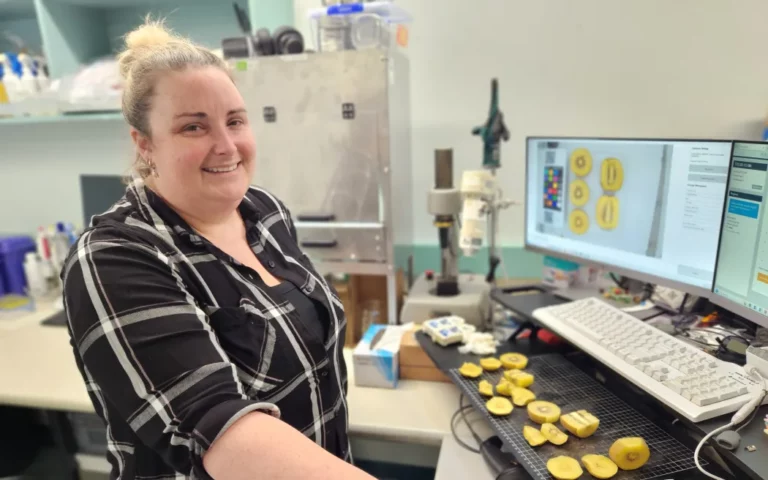
▲Research technologist, Megan Wood, in the sensory lab where she analyses kiwifruit bred at the Kiwifruit Breeding Centre
Thousands and thousands of kiwifruit pass between the gloved fingers of research technologist Megan Wood, and she reaches for them just as a consumer might.
“Essentially, I just feel them, and I think I would eat that one.
“We’ve been doing it for years, so my best guess is usually pretty good.”
成千上万的猕猴桃在研究技术员梅根·伍德戴手套的手指间穿梭,她像消费者一样伸手去拿。
“基本上,我就是能感觉到它们,而且我觉得我会吃那只。”。
“我们做这个已经很多年了,所以我猜的通常都很准。”
She’s a dab hand at analysing the fruit inside and out, working in the sensory lab at the Kiwifruit Breeding Centre (KBC) in Te Puke where the focus is on developing the kiwifruit of the future.
But that first gut feel is followed by a thorough analysis of every bit of the fruit, followed by taste tests and off-site examinations for nutritional benefits.
她是分析水果内外特性的行家,在位于特普克的猕猴桃育种中心(KBC)的感官实验室工作,该实验室的重点是开发未来的猕猴桃品种。
但最初的直觉之后,是对水果的每一部分进行彻底分析,然后进行口味测试和异地检查,以确定其营养价值。
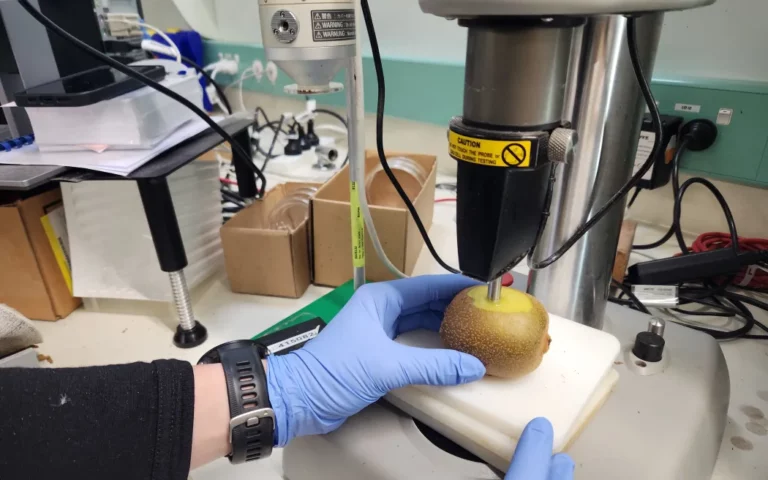
▲Probing a sample for firmness in the sensory lab
A kiwifruit may have too big a knobbly bit on its bottom – “We have had people in the past crack a tooth on it”; and cavities – “If the cavity is too big, too many critters will live in there, and we can’t export it.”
Then there are other features like shape, colour and sugar levels to grade and record.
Established in 2021, the KBC’s Te Puke site is the headquarters for growing and testing new kiwifruit cultivars.
猕猴桃底部可能有一个太大的硬块——“我们过去有人因此磕坏了牙”;还有空洞——“如果空洞太大,就会有太多虫子住进去,我们就不能出口了。”
此外,还有其他特征,如形状、颜色和糖分含量,也需要进行分级和记录。
成立于2021年的KBC的Te Puke基地,是培育和测试新猕猴桃品种的总部。
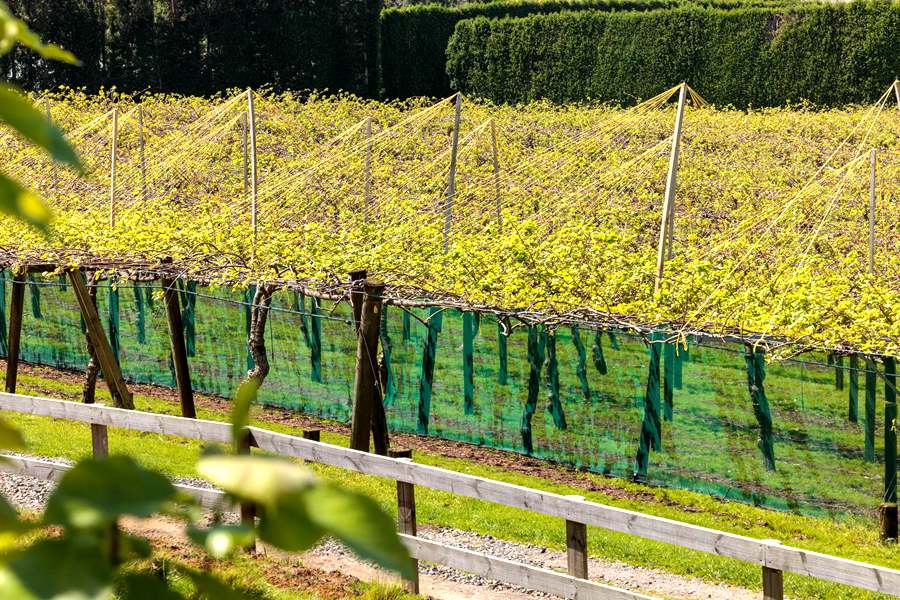
▲新西兰高枝牵引猕猴桃果园照片
Kiwifruit is New Zealand’s largest horticultural export, worth $3.9 billion in the year ended June 2025, following 2024’s record crop.
KBC – which also has trial orchards in Kerikeri, Motueka, Gisborne and Italy – is a joint venture between Zespri and Plant and Food Research, now part of the Bioeconomy Science Institute.
It’s led by chief executive Matt Glenn.
猕猴桃是新西兰最大的园艺出口产品,在2024年创纪录收成后,截至2025年6月的一年里,其出口额达到39亿美元。
KBC是佳沛(Zespri)与新西兰植物与食品研究所(现为生物经济科学研究所的一部分)的合资企业,该公司在凯里凯里(Kerikeri)、莫图依卡(Motueka)、吉斯伯恩(Gisborne)和意大利均设有试验果园。
该团队由首席执行官马特·格伦领导。
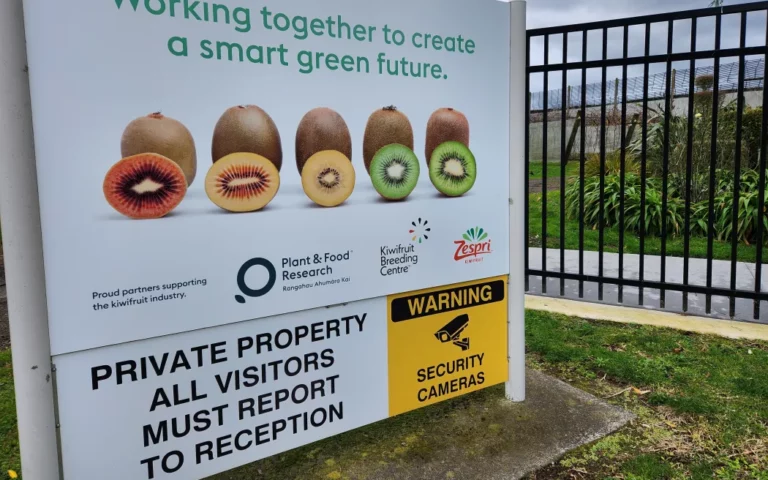
▲The Kiwifruit Breeding Centre is careful to maintain security around its trials
“We’re sort of the grease in the wheels between the researchers in the laboratory and Zespri, who are the commercialisation partner, and that’s really why we set up the joint venture as well, because we can focus really on deploying the technology, implementing it, and then driving it through to a commercial outcome.”
“我们就像是实验室研究人员和商业化合作伙伴Zespri之间的润滑剂,这也是我们成立合资企业的真正原因,因为我们可以真正专注于部署技术、实施技术,然后将其推向商业成果。”
And that process is a lengthy one – it can take up to 25 years from the initial idea to actual fruit on the shelf.
Glenn said they start with a “concept” requested by Zespri and from there develop “elite parents” from raw germplasm originating in Sichuan, China, a process which takes four or five years.
It takes another five years for seedlings to grow and produce the required fruit at KBC’s orchards around the country.
“Out of those 30 or 40,000 that we plant as seedlings every year, there’s probably about two or 300 that go into the next stage, which is the clonal commercial testing.”
That can take another five years.

▲helping growers achieve their ultimate pollination
“我们就像是实验室研究人员与商业化合作伙伴佳沛之间的润滑剂,这也是我们成立合资企业的真正原因,因为我们可以真正专注于部署技术、实施技术,并推动其取得商业成果。”
而这一过程相当漫长——从最初的想法到货架上的实际产品,可能需要长达25年的时间。
格伦(Glenn)说,他们从佳沛(Zespri)要求的“概念”出发,然后从源自中国四川的原始种质资源中培育出“优良亲本”,这一过程需要四到五年时间。
在KBC遍布全国的果园里,树苗还需再长五年才能结出所需的果实。
“在我们每年种植的3万到4万株幼苗中,可能只有大约200到300株能进入下一阶段,即无性繁殖商业测试。”
这可能还需要五年时间。
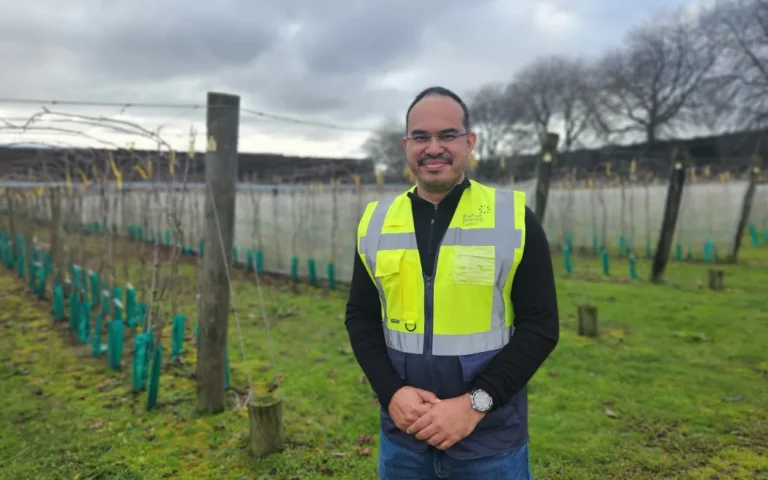
▲Scientist and breeding co-ordinator Amar Nath in one of the trial orchards at the Kiwifruit Breeding Centre Photo: Supplied / RNZ / Sally Round
“After 15 years, we might go back to Zespri and say, ‘hey, do you remember 15 years ago you said you’d like a kiwifruit that look like this? Well, we think here are some candidates’, and we present them to the Zespri board, and they go … ‘they look pretty good, we think we’d like to have a bet on those’, because it’s quite a big bet they’re making at that stage.”
They then put them into the hands of the growers and grow them at hectare scale, before getting the fruit to market and saying “yeah, that’s a winner, we’re going to commercialise it”.
The Te Puke headquarters has 40 hectares of trial orchards as well as laboratories and a cool store which tests the harvested fruit’s resilience at the handling and storage stage.
“15年后,我们可能会回到佳沛公司,说,‘嘿,你还记得15年前你说过你想要一个看起来像这样的猕猴桃吗?好吧,我们认为这里有一些候选品种’,然后我们把它们展示给佳沛董事会,他们说……‘它们看起来很不错,我们想在这些品种上下注’,因为在这个阶段,他们下的赌注相当大。”
然后,他们将这些种子交给种植者,让他们在公顷规模上进行种植,之后将果实推向市场,并说“是的,这是一个成功的品种,我们要将其商业化”。
特普克(Te Puke)总部拥有40公顷的试验果园以及实验室和冷藏库,用于测试收获的水果在搬运和储存阶段的耐受力。

▲红心猕猴桃种植
Breeding for a future climate
Aside from improvements to existing varieties, KBC is also developing cultivars which will be able to cope with the changing climate, and its 30ha orchard in Kerikeri in Northland is an important testing ground, Glenn told Country Life.
为未来气候进行育种
除了对现有品种进行改良外,KBC还在开发能够适应气候变化的栽培品种,其位于北岛凯里凯里的30公顷果园是一个重要的试验场,格伦向《乡村生活》杂志介绍道。
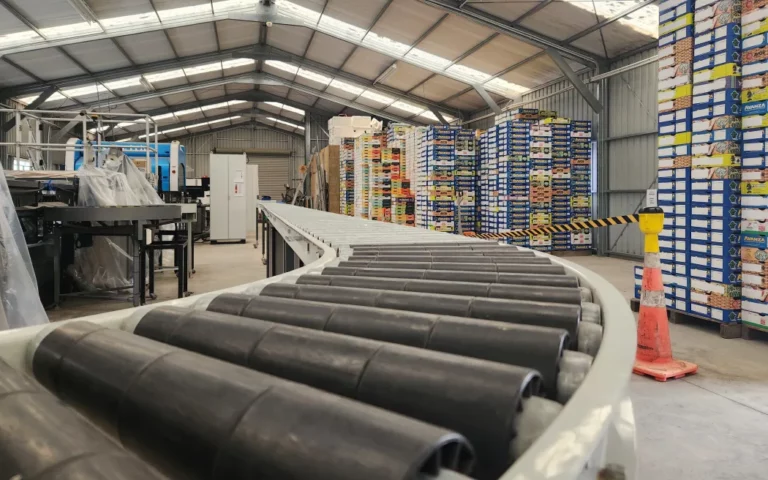
▲The KBC’s cool store where kiwifruit are graded and chilled.
“The modelling that we’re seeing is telling us that the climate in the Bay of Plenty, where 80 percent of kiwifruit are grown, will be like Northland by about 2050, 2060.
“We have put [the cultivars] under that pressure, that evolutionary pressure, effectively of warmer, wetter temperatures than we get down here in the Bay … so by the time the Bay looks like that we know that we will have cultivars that will work successfully down here.”
Increasing intense weather events are also considered in the breeding programme, with a trial orchard in Italy which is breeding new root stocks to deal with very wet heavy soils.
“At the same time, we’re going to have areas, that are going to have soils that are salinating, or soils that are very dry, so we’ve actually got to be looking at every extreme in just about everything that we do.”
Glenn said successful fruit pass tests in three different areas – they have all the things a consumer wants, good yield and resilience for the grower and are supply chain ready.
“We’ve got to make sure that the fruit don’t have spikes on them that so they [don’t] puncture other fruit as they go through the process, got to make sure that they’re really hardy, so you can pick them while they’re quite firm, but then they’ll go through the supply chain really well.

▲Red heart kiwifruit orchard in Sichuan Province, China
“我们看到的模型预测,到2050年、2060年左右,猕猴桃种植面积占80%的丰盛湾的气候将与北岛相似。
“我们已经让(这些品种)承受了那种压力,即比我们在湾区这里更温暖、更湿润的气候条件所带来的进化压力……因此,等到湾区气候变得如此时,我们就知道会有一些品种能够在这里成功生长。”
育种计划中也考虑了日益加剧的极端天气事件,意大利的一个试验果园正在培育新的砧木,以应对非常潮湿且沉重的土壤。
“与此同时,我们还将面临一些地区,那里的土壤正在盐碱化,或者土壤非常干燥,因此,在我们所做的几乎每一件事上,都必须考虑到每一种极端情况。”
格伦表示,成功的水果品种需在三个不同方面通过测试——它们要具备消费者想要的所有特质,对种植者来说要有良好的产量和抗逆性,并且要准备好进入供应链。
“我们必须确保水果表面没有尖刺,以免在加工过程中刺破其他水果。同时,还要确保它们非常耐寒,这样你就可以在它们还相当坚硬的时候采摘,然后它们就能很好地通过供应链。
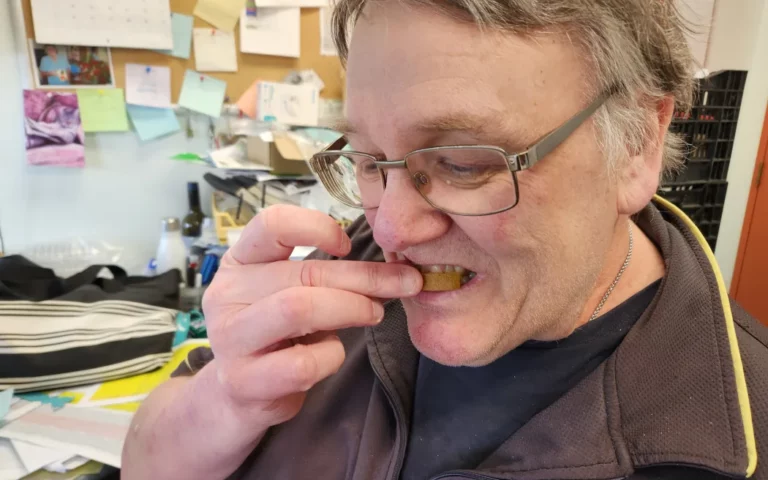
▲The KBC’s cool store where kiwifruit are graded and chilled.
“If any one of those three things is missing, the likelihood is that the fruit won’t be successful.”
Glenn said they were also working on developing a green kiwifruit “that may not need some of the chemical inputs that the farmers use traditionally”.
Speeding up the process
Artificial intelligence and precision breeding, also known as gene editing, could help speed up the lengthy process, Glenn said.
AI will help in decision-making with the large amount of data they collect but “you’ve still got to ground truth all the things that you do, so you’ve got to put seeds in the ground and grow them, and look at the fruit, and look at multiple fruit, and see if that’s really going to be sustainable”.

▲Using a new lithium battery kiwi pollination machine
“如果缺少这三样中的任何一样,那么这款水果(或产品)成功的可能性就不大了。”
格伦(Glenn)说,他们还在努力培育一种绿色猕猴桃,“这种猕猴桃可能不需要农民传统上使用的一些化学投入品”。
加快进程
格伦(Glenn)表示,人工智能和精准育种(亦称基因编辑)有助于加快这一漫长过程。
人工智能将利用其收集的大量数据辅助决策,但“你仍需对你所做的一切进行实地验证,因此,你需要播下种子,让它们生长,观察果实,并观察多个果实,以判断这是否真的具有可持续性”。
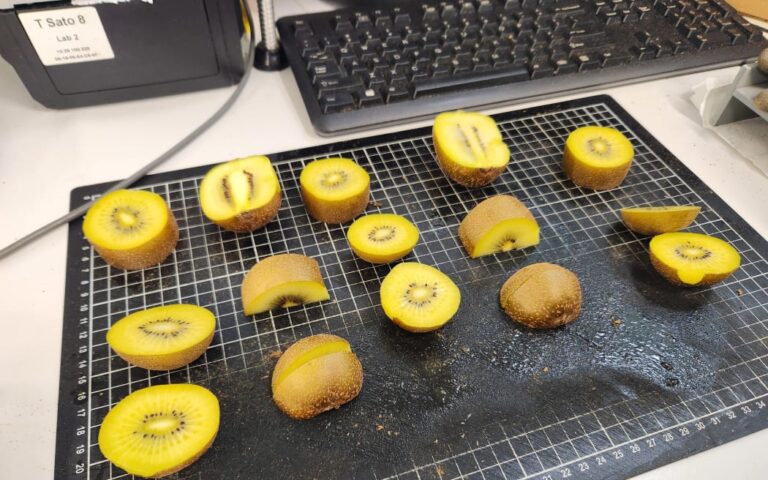
▲Kiwifruit samples from a particular vine ready for analysis
“What we’re particularly interested in is the precision breeding. Some people call it gene editing, but we call it precision breeding, where you’re making really small base pair level changes.
“You’re not introducing any DNA, and you might be just up-regulating or down-regulating particular genes within the genome, so what you’re doing is you’re maximising the potential of the genetics that are already in the plant.”
But he said they can’t use the technology, being used in contained greenhouses and labs at the moment, until there’s a change in legislation.
“We just think we need to be a bit more sophisticated than we’ve been over the last 30 years of having a really blunt legal instrument to deal with new technologies that are going to really help us advance the industry.”
“我们特别感兴趣的是精准育种。有些人称之为基因编辑,但我们称之为精准育种,即进行非常小的碱基对级别的改变。
“你并未引入任何DNA,只是上调或下调基因组中的特定基因,因此你所做的就是最大限度地发挥植物本身遗传物质的潜力。”
但他表示,在相关法规发生变化之前,他们无法使用目前仅在封闭式温室和实验室中使用的这项技术。
“我们认为,在过去的30年里,我们一直使用一种非常生硬的法律工具来处理那些真正有助于我们推动行业发展的新技术,现在我们需要更精细一些。”

▲helping growers achieve their ultimate pollination


评论